
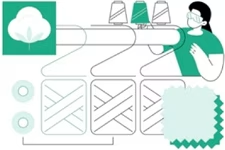
Product-backwards traceability through self-declaration
Where tier-1 initiates request to tier-2 to share key data attributes, thereby creating backwards cascading throughout the supply chain at Order/article level.

Peer-to-Peer validation
Each supply chain player confirms the previous supplier tier along with supporting transaction documents for article tracked at each transformation step (e.g. packing list, PO, invoice).

Focused on conventional materials
Commodity, conventional materials are ideally suitable for product backwards traceability since they don’t have a verified point of origin.
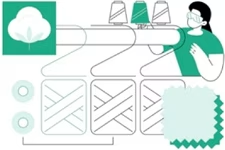
Product-backwards traceability through self-declaration
Where tier-1 initiates request to tier-2 to share key data attributes, thereby creating backwards cascading throughout the supply chain at Order/article level.
Peer-to-Peer validation
Each supply chain player confirms the previous supplier tier along with supporting transaction documents for article tracked at each transformation step (e.g. packing list, PO, invoice).
Focused on conventional materials
Commodity, conventional materials are ideally suitable for product backwards traceability since they don’t have a verified point of origin.
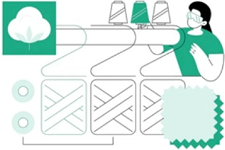
Supply chain mapping does not prevent the risk of double or triple-counting – a pervasive problem in the preferred and certified materials supply chains.
This Supply chain discovery module is ideally suited for conventional and commodity materials in textiles, or for more complex finished products such as Footwear.
Other Solutions
Supply Chain Mapping (SCM)
Supply chain mapping creates rapid supply chain visibility by engaging just tier-1 suppliers to capture the entire supply chain traceability data.